
Springtime Pot-au-feu Beef Stew

Our spring has been less than exemplary, with record low temperatures and downpours. And in a country that loves (loves!) to complain about the weather, the season has turned into a total moan fest.

I usually try to steer clear of such discussions — is there anything less constructive than griping about something no one can control? — and just nod non-noncommittally whenever bad-weather comments are made. But in this instance, even I have to admit that boy, this May has felt a lot like a November.

The lovely thing about pot-au-feu is that is it meant to be served in two installments: first the broth, with fresh herbs and good crusty bread, and then the meat and vegetables, with more of the broth, strong mustard, and perky little cornichons.

And so, in order to bridge the gap between the expected season and the actual one, I decided to make a springtime pot-au-feu. It would combine the comforts of this epitomic cold-weather beef stew with the vibrancy of the first sprightly vegetables that have bravely managed to sprout and grow despite the unseemly meteorologic conditions: pencil-thin new carrots, baby fennel bulbs, green peas, and waxy little potatoes.

For a really good pot-au-feu, you need to cook the meat for a goooood loooong time — four hours is just about right — and you need to make it the day before you intend to serve it: this allows the flavors to deepen, and gives you a chance to skim some of the fat from the broth, making the whole dish lighter and more refined.

The classic wintry pot-au-feu typically includes leeks, carrots, turnips, celeriac, and potatoes, and sometimes cabbage, which are added to the meat as it cooks until they become very very tender. In my version, since the vegetables I wanted to feature were quick to cook, I first stewed the meat with the odds and ends I keep in the freezer for stock-making purposes, such as leek greens and fennel tops, to produce a flavorful broth in which to cook the star vegetables at the last minute.

The lovely, lovely thing about pot-au-feu is that is it meant to be served in two installments: first the broth, with fresh herbs and good crusty bread, and then the meat and vegetables, with more of the broth, strong mustard, and perky little cornichons*.

Pot-au-feu is ordinarily a dish that I would cook for company, but this time I decided to make it just for us, with good meat I had purchased through the Ruche qui dit oui!. We got three splendid dinners out of it during a very busy week when it was a blessing to have our evening meals ready to reheat in minutes. (I will also note, if case you have a young child at home, that my one-year-old took to the dish like a duck to water; this currently holds his record for most food-related enthusiasm.)

* You can even wedge in a third attraction by cooking marrow bones (one section per guest) in the broth for 30 minutes, and serving them with toasted bread after the broth and before the meat, sprinkled with fleur de sel and black pepper. Marrow bones may also be roasted in the oven at 200°C (400°F) for 25 to 30 minutes.

Continue reading »

“Everything” Sweet Potato Flatbreads

In honor of International Sweet Potato Week (yes, it’s a thing!), let me share my life-altering recipe for sweet potato flatbreads, seasoned with an “everything” spice mix.

This is originally inspired by a reader named Jo, who commented on my 40 Ways to Cook Sweet Potatoes post, saying that she made such flatbreads and sold them from her market stand along with other breads. Such a simple, brilliant idea stuck in my head, and I vowed to try it soon.

Making grain-free sweet potato flatbreads

Jo generously explained that she makes her sweet potato flatbreads with a 1:1 mix of puréed sweet potatoes and all-purpose flour, but for both color and flavor, I decided to lean more heavily on the sweet potato and used a 2:1 ratio instead.

I also chose to make my sweet potato flatbreads with cassava flour (farine de manioc in French), which I’ve been experimenting with lately. Cassava is the tuberous root from which tapioca starch is extracted, and it is ground into a grain-free (by definition), gluten-free, paleo-friendly* flour that is quite extraordinary: it is a much better binder than other gluten-free flours, and it yields beautifully pliable flatbreads or tortillas.

Want to see just how pliable?

Continue reading »

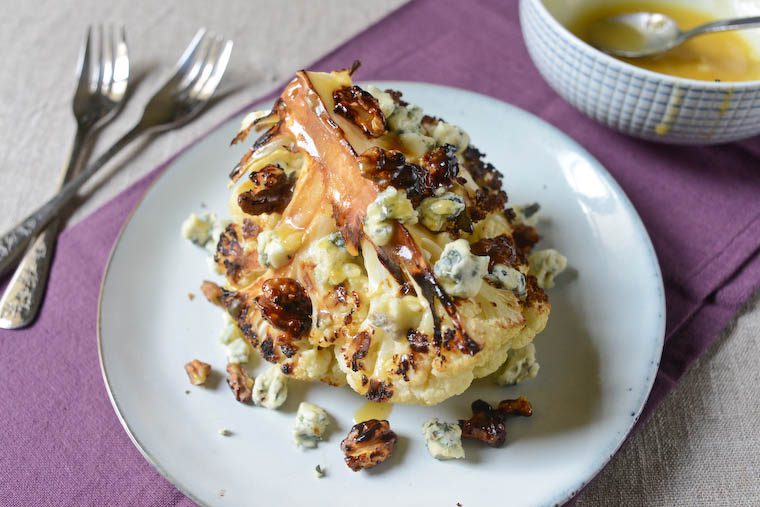
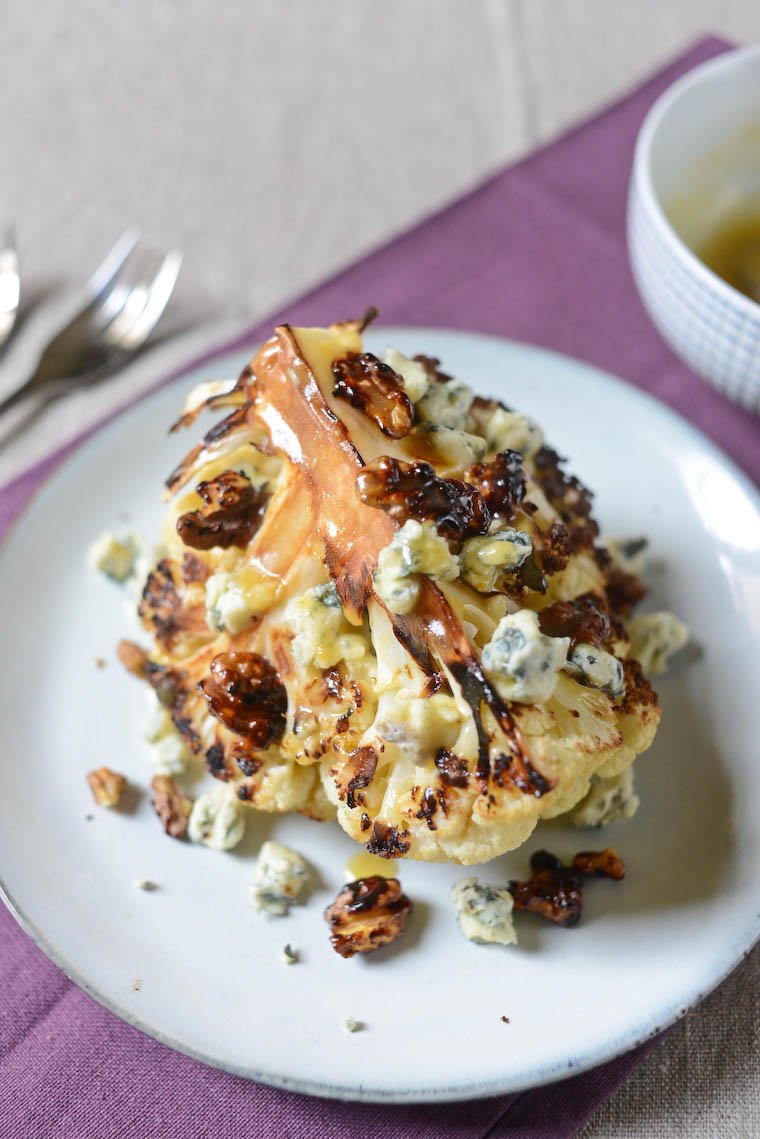
Roasted Cauliflower Wedge with Blue Cheese and Caramelized Walnuts

Roasted Cauliflower with Blue Cheese and Caramelized Walnuts

I want to preface this roasted cauliflower wedge recipe with one of the biggest lessons that having children has taught me, and it is: appreciation.

Appreciation for them as budding humans and appreciation for their amazing father? Absolutely. Appreciation for my parents’ decades of parenting and for my dear friends’ support? Certainly.

But, more selfishly, they have taught me to appreciate many things I used to take for granted pre-kids. Things that feed me, light me up, and make me me, but have been crowded out by other things that feed me in other ways, light me up in other ways, and define another side of me.

It’s all good: chapter of our lives, grow up so fast, next thing you know, moving out of the house, etc.

And the way I see it, I have been gifted with a priceless new perspective that allows me to experience all flavors of bliss when I read three pages of my book at the playground on a Sunday morning (in half-paragraph bursts); when I go over my fantastic flourishes worksheets while they’re coloring next to me (they’re helping me with this Paris coloring book); when everyone is fiiiiiiinally asleep and I tuck my own self into bed with a fresh episode of riveting fiction.

Roasted Cauliflower with Blue Cheese and Caramelized Walnuts

And date nights? Oh, date nights! The anticipation, the thrill, the magic of tiptoeing down our staircase and stepping out into absolute freedom, just the two of us, the city our oyster!

Sometimes we delight in having a simple meal at a neighborhood favorite; other times we plan an evening somewhere new and exciting.

Continue reading »

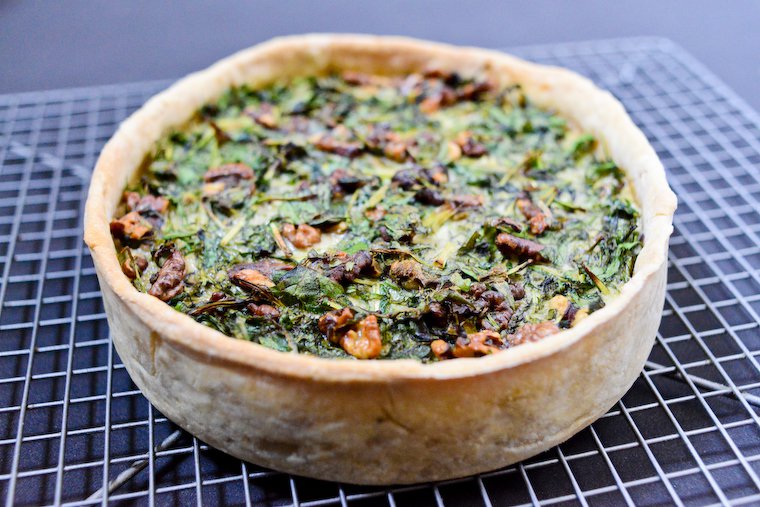
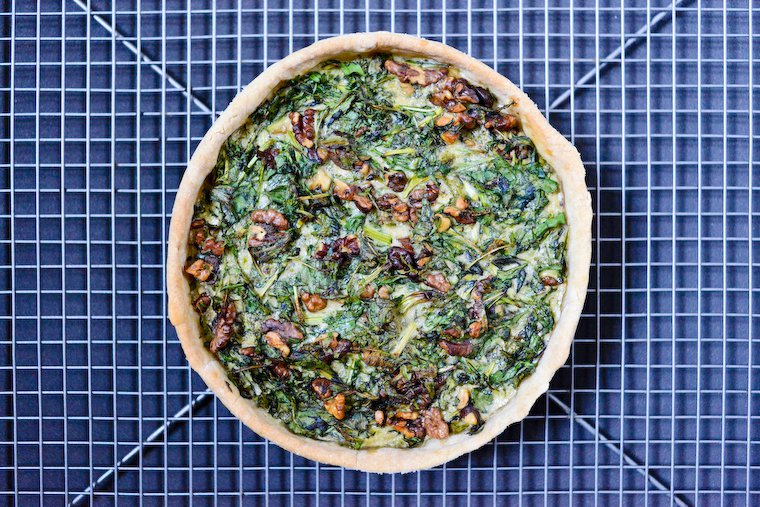
Green Quiche with Walnuts

For the past couple of months, my weekly vegetable allotment has included big bags of salad greens, oftentimes the scratchy and flavorful kind such as frilly mustard leaves or peppery mizuna or a mix of both.

We love to eat those dressed in a classic vinaigrette or a cooked shallot vinaigrette. But there’s only so much salad even I can eat before green tendrils start growing out of my ears — and only so many days these greens can spend in the crisper before they lose their pert. So I devised this green quiche recipe with walnuts to use up a bunch of them, with some walnuts thrown in for extra crunch and flavor.

There’s only so much salad even I can eat before baby green tendrils start growing out of my ears, so I devised this green quiche recipe to use up my greens.

I make this green quiche with my trusty and beloved olive oil tart crust: I drape it over and into a deep tart ring to produce a petite but thick quiche, which I find attractive. Such tart rings are available from professional cooking and baking supplies stores — I believe I got mine from E. Dehillerin — but if you don’t have that on hand, a regular pie or quiche pan will work just fine.

So far I’ve kept this quiche vegetarian, but the addition of crumbled bacon, no-additives lardons sautéed until crisp, or torn strips of leftover roast chicken wouldn’t hurt one bit.

As a bonus, this green quiche recipe will leave you with scraps of olive oil tart pastry, which I recommend you upcycle into these seaweed and seed crackers.

Join the conversation!

Do you ever find yourself with a glut of greens, and if so, how do you deal with it when you tire of salads?

Greens and Walnut Quiche

Continue reading »

Caramelized Sesame Chocolate Bar

Caramelized Sesame Chocolate Bar

Not long after my second son was born, I received a message from Audrey, a reader I’d been conversing with via emails and comments, who wanted to recommend a recipe drawn from the French blog La Belle au blé dormant*. It was a recipe for a sesame chocolate bar garnished with squash seeds, sunflower seeds, and caramelized sesame, which both she and the blog’s author Nolwenn had found instrumental in surviving the first few weeks with a newborn.

I read through the recipe and at first the idea of my finding the time and brain bandwidth to make something like this seemed laughable, but it turns out my appetite for chocolate is strong enough to move mountains: I could not get that recipe out of my head, and within a few days I was indeed preparing a modified version for myself — one with just the sesame — accomplishing one small step at a time in between maternal duties.

The smooth bitterness of the dark chocolate combined with the crunchy, nutty, caramelized sweetness of the sesame clusters made for a sublime combination, and already I knew that chocolate bar would not live to see the end of the week.

The sesame chocolate bar project

On one morning, I toasted the sesame seeds. Later, I made the caramel, mixed in the sesame, and broke up that (tasty, tasty) sesame bark into small clusters. The next day, I dug out my digital probe thermometer and tempered the chocolate (yes, tempered the chocolate, that’s how ambitious I was), stirred in the caramelized sesame nuggets, and poured the mixture into a narrow loaf pan.

A couple of hours later, when the dust had settled and the chocolate had set, I unmolded the thick sesame chocolate bar, had a taste, and my eyes rolled back into their sockets: this was insanely! good! The smooth bitterness of the dark chocolate** combined with the crunchy, nutty, caramelized sweetness of the sesame clusters made for a sublime combination, and already I knew that chocolate bar would not live to see the end of the week.

I have since made several more batches of that caramelizes sesame chocolate bar, and even invested in two silicone molds such as these to make actual bars with breakable squares (the faint swirls in that picture indicate I failed to temper the chocolate properly that day; I’m still not a pro at it, and the baby was crying). Some of these bars went straight into my belly, others were given away as gifts — one of them to a new mother — and I am happy to say they made a gratifying impression on the recipients.

I’ll note that if you don’t have the time or inclination to make the actual bars, you should consider making just the caramelized sesame: it’s extremely easy and a wonderful treat in its own right.

Join the conversation!

Have you ever made your own chocolate bars? What recipe did you use and how did you like the results?

PS: Make this wonderful Cinnamon Granola Chocolate Slab or these easy Ginger and Almond Chocolate Clusters, and make sure you know How To Taste Chocolate!

* Allow me to explain the pun: La Belle au bois dormant (literally, “the beauty sleeping in the woods”) is French for Sleeping Beauty, and the author of this allergy-conscious blog has replaced bois (woods) by blé (wheat).

** [sc:chocolate]

Caramelized Sesame Chocolate Bar

Continue reading »

Get the newsletter

Receive FREE email updates with all the latest recipes, plus exclusive inspiration and Paris tips. You can also choose to be notified when a new post is published.

View the latest edition of the newsletter.